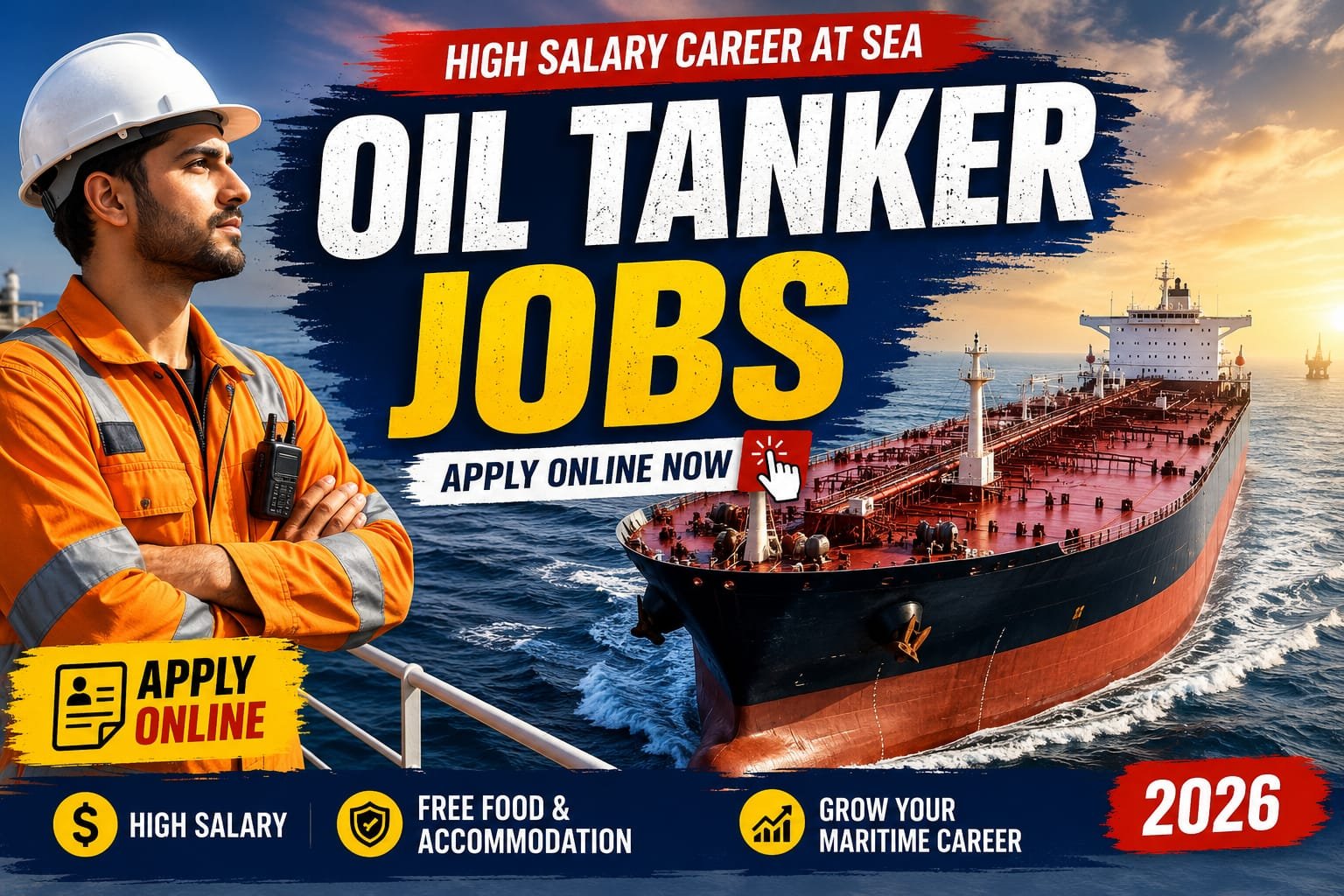
The global shipping industry continues to offer some of the highest-paying careers for skilled seafarers, and Oil Tanker Jobs 2026 are expected to remain in high demand. As international trade and energy transportation continue to grow, shipping companies are actively hiring qualified crew members for oil tankers across the world.
Whether you’re an experienced seafarer or planning to begin a maritime career, oil tanker jobs can provide excellent salaries, international travel opportunities, career growth, and attractive benefits. In this guide, you’ll learn everything you need to know about eligibility, job positions, salaries, certifications, and how to apply online.
What Are Oil Tanker Jobs?
Oil tanker jobs involve working aboard specialized vessels that transport crude oil, petroleum products, and other liquid cargo across international waters. These ships require trained professionals to ensure safe navigation, cargo handling, engineering operations, and onboard maintenance.
Working on an oil tanker is both rewarding and challenging. Employees usually work in rotations, spending several months at sea before taking paid leave.
Why Choose an Oil Tanker Career in 2026?
The maritime industry offers several advantages that attract thousands of job seekers every year.
Key Benefits
- High tax-free salaries in many countries
- Free accommodation and meals onboard
- International work experience
- Paid vacation after each contract
- Medical insurance and health benefits
- Career advancement opportunities
- Opportunity to visit multiple countries
Many experienced officers and engineers earn significantly higher salaries than land-based professionals with similar qualifications.
Popular Oil Tanker Job Positions
Oil tanker companies recruit crew members for a wide range of positions.
Deck Department
- Captain (Master)
- Chief Officer
- Second Officer
- Third Officer
- Deck Cadet
- Able Seaman (AB)
- Ordinary Seaman (OS)
Engine Department
- Chief Engineer
- Second Engineer
- Third Engineer
- Fourth Engineer
- Motorman
- Oiler
- Wiper
Catering Department
- Chief Cook
- Steward
- Messman
Each position has different educational and certification requirements.
Eligibility Requirements
Most employers look for candidates who meet international maritime standards.
Typical requirements include:
- Minimum age of 18 years
- Valid passport
- STCW Basic Safety Training certificates
- Seaman Book (CDC)
- Medical fitness certificate
- Good English communication skills
- Relevant maritime qualifications
- Previous sea experience (for senior positions)
Fresh graduates from maritime academies can often apply for cadet positions.
Expected Oil Tanker Salaries in 2026
Salary depends on rank, company, experience, and vessel type.
Approximate monthly salary ranges include:
| Position | Estimated Monthly Salary |
|---|---|
| Captain | $8,000–$15,000 |
| Chief Engineer | $8,000–$14,000 |
| Chief Officer | $6,000–$10,000 |
| Second Engineer | $5,500–$9,000 |
| Third Officer | $3,000–$5,500 |
| Able Seaman | $1,500–$3,000 |
| Oiler | $1,400–$2,800 |
| Cook | $1,500–$3,500 |
| Deck Cadet | $500–$1,500 |
Actual salaries vary depending on the employer, trading route, and experience level.
Required Certifications
Most international oil tanker companies require globally recognized certifications.
Common certificates include:
- STCW Basic Safety Training
- Personal Survival Techniques
- Fire Prevention and Fire Fighting
- Elementary First Aid
- Personal Safety and Social Responsibilities
- Security Awareness Training
- Oil Tanker Familiarization Course
- Advanced Tanker Training (for senior officers)
Keeping certifications valid is essential for employment.
How to Apply Online for Oil Tanker Jobs 2026
Finding legitimate opportunities has become much easier through online recruitment.
Step 1: Prepare Your Documents
Create digital copies of:
- Updated CV
- Passport
- Seaman Book
- Certificates
- Medical reports
- Passport-size photographs
Step 2: Search Trusted Shipping Companies
Apply only through official shipping companies or licensed maritime recruitment agencies.
Step 3: Complete the Application
Fill out online application forms carefully and upload all required documents.
Step 4: Attend Interviews
Successful applicants may complete:
- Online interviews
- Technical assessments
- English language evaluations
- Medical examinations
Step 5: Receive Your Contract
After selection, you’ll receive your employment contract, joining instructions, and travel arrangements.
Tips to Increase Your Selection Chances
Competition for high-paying tanker jobs can be strong. These tips can improve your chances:
- Keep all certificates updated.
- Improve your spoken English.
- Gain experience on merchant vessels.
- Maintain good physical fitness.
- Prepare for technical interviews.
- Apply to multiple reputable companies.
- Keep your CV professional and current.
Candidates who continuously improve their skills often secure better positions and higher salaries.
Is an Oil Tanker Career Worth It?
For many professionals, the answer is yes. Oil tanker jobs provide financial stability, global exposure, and long-term career growth. Although life at sea requires discipline, adaptability, and time away from home, the rewards can be substantial for those committed to the profession.
If you’re passionate about the maritime industry and willing to meet international standards, Oil Tanker Jobs 2026 offer an excellent opportunity to build a successful career while earning a competitive income.
Conclusion
Oil Tanker Jobs 2026 remain among the most attractive opportunities in the global maritime industry. With competitive salaries, excellent benefits, and strong career prospects, these positions appeal to both experienced seafarers and newcomers alike. By obtaining the right certifications, preparing a professional application, and applying through reputable shipping companies, you can take the first step toward a rewarding sea career. Stay informed, keep your qualifications up to date, and apply early to maximize your chances of landing a high-paying oil tanker job in 2026.