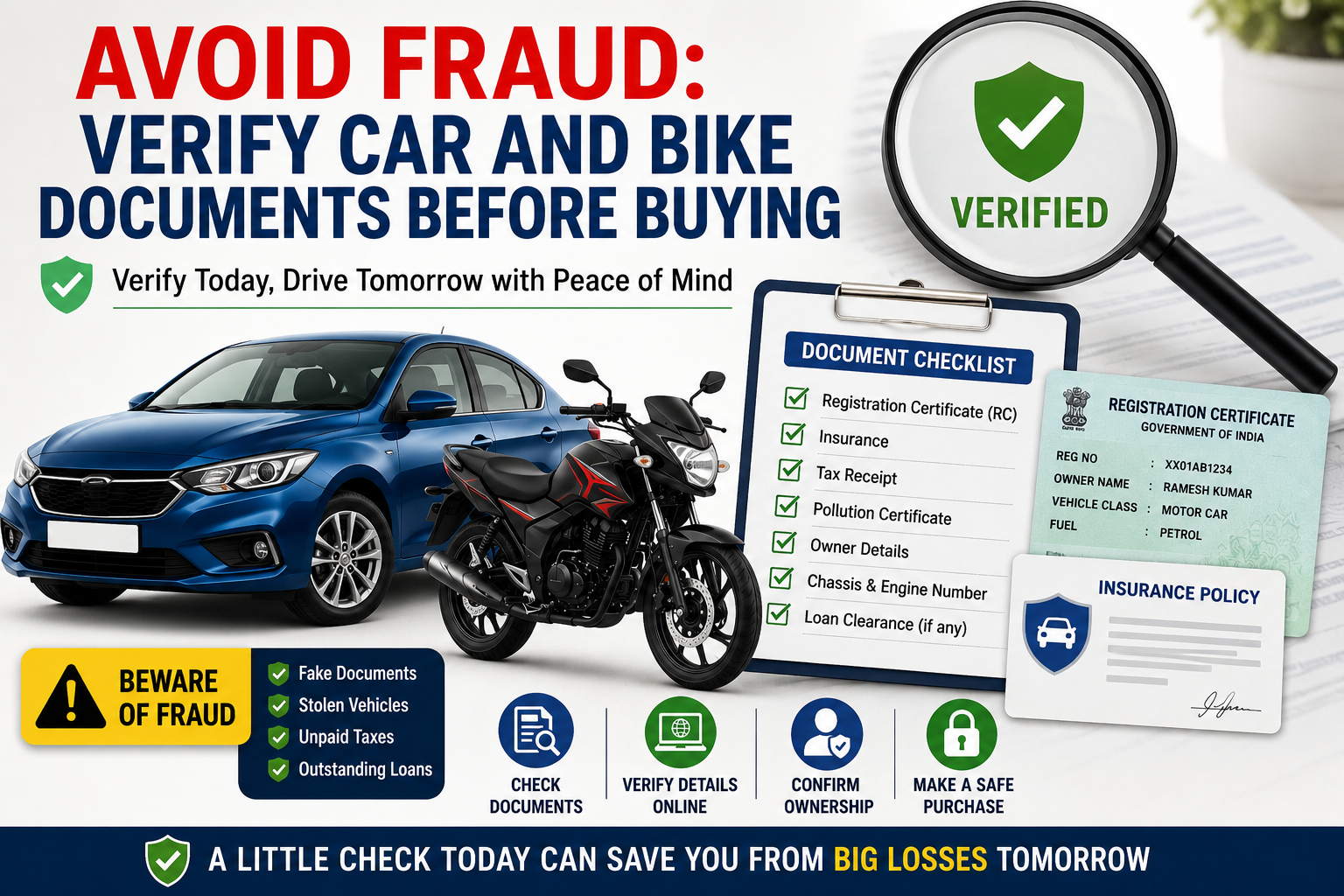
Buying a car or bike is an exciting milestone, whether it’s your first vehicle or an upgrade to a newer model. However, the excitement of getting a great deal can sometimes cause buyers to overlook a critical step: verifying vehicle documents.
Unfortunately, vehicle-related fraud is more common than many people realize. Fake ownership papers, unpaid taxes, tampered registration documents, and stolen vehicles can turn what seems like a bargain into a costly mistake. That’s why verifying car and bike documents before purchasing is essential.
In this guide, you’ll learn why document verification matters, which documents to check, and how to avoid common scams when buying a vehicle.
Why Document Verification Is Important
When purchasing a used car or bike, you’re not just buying the vehicle—you’re also taking responsibility for its legal status. If the documents are incorrect or fraudulent, you could face legal issues, financial losses, or even vehicle confiscation.
Some common risks include:
- Purchasing a stolen vehicle
- Buying a vehicle with outstanding loans
- Receiving forged registration documents
- Facing transfer and ownership disputes
- Paying hidden fines or taxes
A few minutes spent verifying documents can save you from major problems later.
Essential Documents to Verify Before Buying
1. Registration Certificate (RC)
The Registration Certificate is one of the most important documents. It confirms the vehicle’s legal ownership and registration details.
Check the following:
- Owner’s name
- Registration number
- Engine number
- Chassis number
- Vehicle make and model
Ensure that all details match the physical vehicle.
2. National Tax or Token Tax Records
Many buyers forget to check whether taxes have been paid. Unpaid taxes may become the new owner’s responsibility after purchase.
Verify:
- Tax payment history
- Outstanding dues
- Current registration status
This step helps prevent unexpected expenses after buying the vehicle.
3. Vehicle Insurance Documents
Review the insurance records carefully.
Check:
- Insurance validity date
- Policyholder information
- Coverage details
- Claim history, if available
A valid insurance record indicates that the vehicle has been maintained responsibly.
4. Original Purchase Invoice
The original invoice helps establish the vehicle’s ownership history and authenticity.
Compare the invoice details with the registration documents to ensure consistency.
5. Vehicle Transfer Documents
If the vehicle has changed owners multiple times, ask for all transfer records.
These documents help confirm that ownership transfers were completed legally and properly.
How to Verify Vehicle Information Online
Today, many government departments provide online verification services. Buyers can enter a vehicle registration number and instantly access important information.
Online verification typically allows you to check:
- Registered owner’s details
- Vehicle registration status
- Tax records
- Vehicle make and model
- Registration validity
Using official online verification platforms helps reduce the risk of fraud and provides confidence before making a purchase.
Common Vehicle Fraud Scams to Watch For
Fake Registration Documents
Scammers may create forged registration certificates that look genuine. Always compare document details with official records.
Tampered Chassis or Engine Numbers
Fraudsters sometimes alter vehicle identification numbers to hide a vehicle’s history.
Inspect the numbers physically and ensure they match the documentation.
Stolen Vehicles
A vehicle may appear legitimate but could be reported stolen.
Verifying ownership through official records can help you avoid this serious problem.
Outstanding Loans
Some vehicles are sold while still under financing agreements.
Request proof that any outstanding loans or leases have been cleared before purchase.
Practical Tips for Safe Vehicle Buying
Meet the Seller in Person
Avoid transactions conducted entirely online. Meeting the seller allows you to inspect both the vehicle and documents carefully.
Inspect the Vehicle Thoroughly
A professional inspection can reveal hidden issues and confirm that vehicle details match the paperwork.
Verify Before Paying
Never pay the full amount until document verification is complete.
Use Official Verification Sources
Always rely on official government databases and authorized verification websites rather than third-party claims.
Keep Copies of All Documents
Maintain copies of:
- Registration certificate
- Tax records
- Insurance papers
- Sale agreement
- Ownership transfer documents
These records may be useful in the future.
Benefits of Verifying Car and Bike Documents
Document verification offers several advantages:
- Protection from fraud and scams
- Confirmation of legal ownership
- Reduced financial risk
- Easier ownership transfer
- Greater peace of mind
Most importantly, it ensures that you’re investing your money in a legitimate vehicle.
Conclusion
Buying a used car or bike can be a smart financial decision, but only if you take the necessary precautions. Verifying vehicle documents before purchase is one of the most important steps in the buying process. By checking registration records, tax status, insurance documents, ownership history, and vehicle identification numbers, you can protect yourself from fraud and costly mistakes.
Before handing over your money, take the time to verify every detail. A safe purchase starts with proper document verification, and that simple step can save you from significant trouble in the future.